
The Secret to Dealing with Change in the Workplace? Good Managers

Change is inevitable, and it can be difficult to navigate.
However, organizations have a secret weapon they can deploy to effectively manage change: Managers.
Managers play a crucial role in helping their teams through change by creating a psychologically safe environment that directly affects what psychologists call the change curve—our typical human reactions and processes as we experience change.
I’ve seen firsthand how managers can either help teams navigate extraordinary and tough circumstances. Alternatively, I’ve also seen them become the biggest barrier to helping their team navigate change.
In this article, I will share lessons I’ve learned from my work helping thousands of managers develop the skills to manage change effectively, including the underlying process that supports successful transitions. As a trained Organizational Psychologist, I’ll share insights into what’s going on psychologically during times of change. Finally, I’ll share tools that can help your organization and teams navigate change.
How Managers Affect the Change Process
Dr. Mark Scullard, the Senior Director of Product Innovation behind Everything DiSC®, knows from research and personal experience that organizations today face constant change.
Managers often feel alone and unsure of how to help their direct reports navigate organizational change, from a disinvestment in a core business, to mass lay-offs, to new roles and responsibilities.
Dr. Scullard’s research shows that while managers cannot change their employees’ emotional reactions, they can lessen the intensity of the dip on the change curve by creating a safe environment.
Actions that managers can take don’t need to be grand or orchestrated. Scullard states that, “Even a very small, targeted action can make a very profound difference in that person’s life.”
For example, if a manager sat down with me and sincerely asked, “How are you feeling about the recent change that was shared by leadership today?”, I would immediately feel as though my manager values my opinion and genuinely cares about my well-being. My outlook and perspective on the impending change will likely be more positive and open.
The length of time I avoid the uncertainty and the pain the change may cause shortens. This will allow me to adjust and reorient myself to the new normal. Likely, I will shift my focus away from the loss of “what was” and toward adjusting to the future and “what will be.”
This interaction seems very simple, and it is! There is a lot happening psychologically, however. Next, I will discuss the psychological processes that occur during this type of interaction.
Even a very small, targeted action can make a very profound difference in that person’s life.
Dr. Mark Scullard LinkedIn
The Psychological Processes That Help Us Deal With Change
When a manager connects with employees in a sincere and genuine way, they are helping to support two distinct processes that positively influence how direct reports deal with change:
- Shorten an employee’s change curve
- Promote Interpersonal Psychological Safety
The Change Curve
The Change Curve is a model that helps us understand how we all process change. It has three steps:
- Disorientation
- Reorientation
- New Normal
The pandemic created a change curve that everyone experienced simultaneously. In fact, the term “new normal” became synonymous with the changes brought on by the pandemic.
Deep Change Curve

Shortened Change Curve

While the change curve is naturally occurring, its depth can be shortened.
Disorientation can be shortened, and managers play a key role in helping re-orient their direct reports.
In my example, when a manager asked how I felt about a recent change, they helped me reorient my view of it. Instead of the change happening to me, I was part of the change.
Psychological Safety
Psychological safety is a belief that one can take interpersonal risks in a work environment without fear of negative consequences. This means that employees feel comfortable asking questions, sharing ideas, and admitting mistakes. However, these things are only possible if there is trust and empathy between the manager and the employee. In a different article, we show how tools like DiSC can help organizations develop psychological safety through interpersonal awareness.
Throughout my 15-year career in the Learning and Development space, I’ve led many learning experiences for teams and coached managers on the power of psychological safety and vulnerability-based trust.
Safety and trust are essential to change management because they help employees feel seen, heard, and valued. Without it, work becomes transactional, and disengagement ensues.
Next, I’ll share tools that I use that help establish psychological safety, along with shortening the change curve.
Tools that Help Managers Deal With Change
Over the years, we have used many tools to help teams and managers deal with change. Here are a few of the ones we use most often.
Everything DiSC®
In my learning sessions, I like to use Everything DiSC Management on Catalyst—a personality assessment and interactive platform that can help managers understand their employees’ unique behaviors and psychological needs through the DiSC model. The assessment identifies four personality styles: Dominance, Influence, Steadiness, and Conscientiousness—and the individual preferences regarding being delegated to, motivated, and developed by their managers.
Each personality type has different needs and preferences, as identified in the table below. In my sessions, I emphasize that everyone experiences change differently, and we should not assume that others perceive it the same way we do. I also reinforce that management is a one-to-one relationship, meaning managers must adjust their management style to each direct report based on their individual needs. Management is not a one-size-fits-all approach, and the best managers know how to tailor their management style to each direct report.
By understanding the different personality styles on their team, managers can become more attuned to the unspoken needs of their team members, adapt their approach to each direct report, lessen the change curve dip, and create a more inclusive and supportive environment.
| DiSC Style | Core Focus | Key Psychological Needs |
|---|---|---|
|
D (Dominance) |
Control & Agency |
* Freedom & authority * Maintaining status * A voice in the conversation * Channel to have grievances heard * Autonomy |
|
i (Influence) |
Connection |
* Expression * Relationships * Inclusion * Acknowledgement of stress * Reassurance & Support * Familiarity |
|
S (Steadiness) |
Stability & Safety |
* Predictability * Confidence things will work out * Freedom from pressure * Privacy & space to adjust |
|
C (Conscientiousness) |
Information & Understanding |
* Clear systems * Clear expectations * Plans to return to normalcy * Justification for the change * Logical decision making * Information about the situation |
By understanding the different personality styles on their team and using Everything DiSC Management on Catalyst to create a psychologically safe environment, managers can help their teams navigate change more effectively.
Leveraging the Everything DiSC on Catalyst Platform for More Insights
Managers can use the Colleagues feature in Catalyst to understand how a direct report may react to change, giving the manager a chance to see the perspective of the team member and in return, create a proactive approach.

Managers can also use the Groups feature in Catalyst to see how their team is similar and different, and host a group discussion on how team members’ reactions to change impact the team. This function will help them understand and develop team culture.

AQai: Adaptability Intelligence
Workplace adaptability is one of the most in-demand skills. Yet it feels very hard to know where to start improving it.
That’s where a new tool called AQai (Adaptability Intelligence) can help. The AQai assessment measures an individual’s capacity for change and helps explain why they respond to change the way they do.
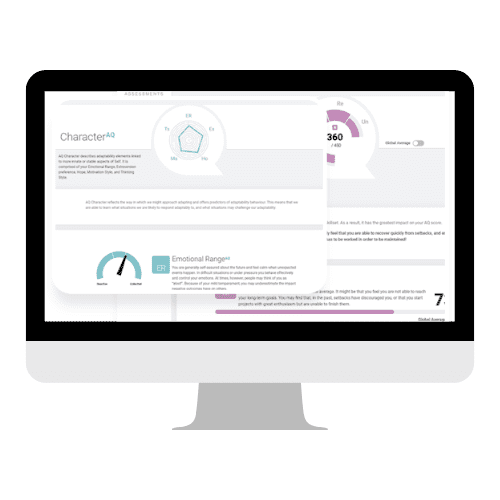
The tool is versatile in supporting learning about both teams’ and individuals’ preferences for change. When used in a team or organizational capacity, it can even predict a group’s Change Readiness Index through the AQai Team Reports.
AQai measures three master dimensions and 16 sub-dimensions. With these insights, your managers can understand not only their own preferences for change but also where they need to work to help individuals on their team adapt.
Tips to Help Managers Deal With Change Right Now
All in all, managers are stretched thin and asked to do what seems like heroics when it comes to managing individuals and teams. With that said, here are some tips and best practices for managers on how to navigate change as a whole:
- Share the vision for change. Help employees understand why the change is happening and what the benefits will be.
- Be open and transparent. Communicate openly and honestly with employees about the change process.
- Be supportive and empathetic. Recognize that change can be difficult and offer employees support during the process.
- Encourage feedback and input. Ask employees for their feedback and input on the change. This will help to ensure that everyone feels heard and valued!
- Celebrate success. As the change progresses, celebrate successes along the way. This will help to keep employees motivated and engaged.
Need Help Getting Started?
Our team has helped thousands of organizations develop greater capacity to deal with change over the last 40 years. Fill out the form below to tell us a little bit about your organizationa nd what you are hoping to accomplish, and we will be in touch.