Emotional Intelligence: Boost EQ in Your Workplace Today
Check Out Our Free Resources to Get Started!
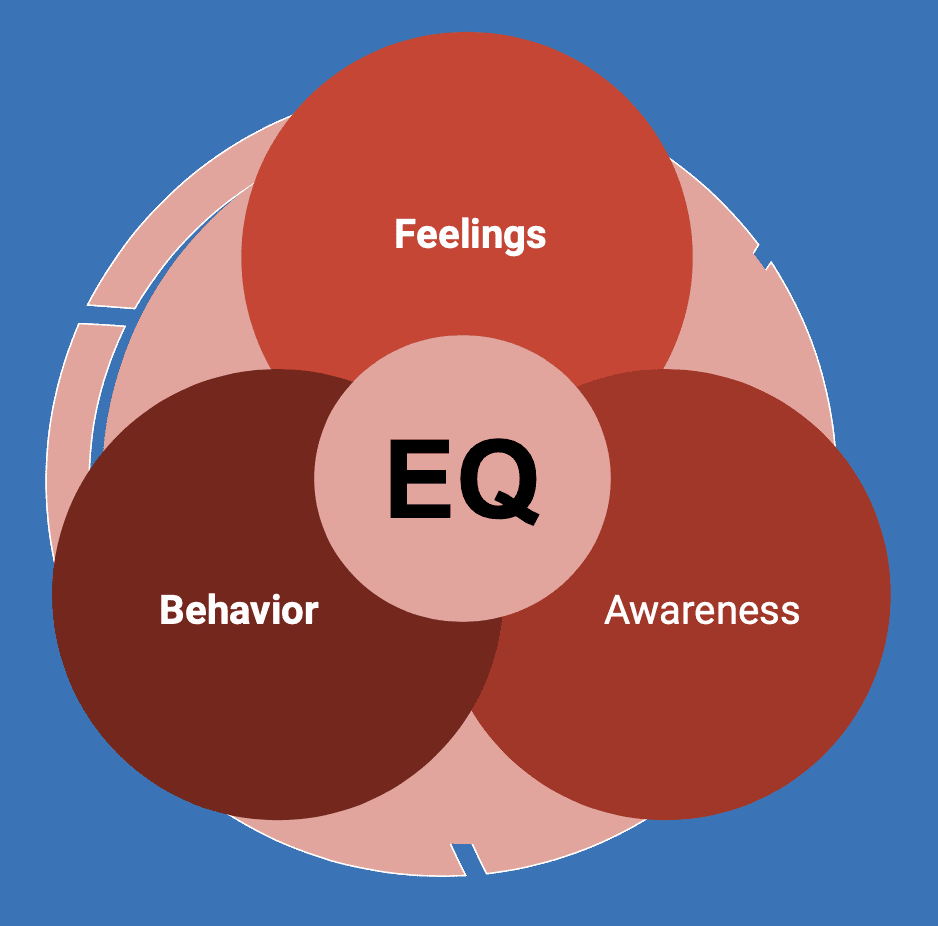
Emotional intelligence is the ability to positively understand, use, and manage your emotions to relieve stress, communicate effectively, empathize with others, overcome challenges, and defuse conflict. Emotional Intelligence is abbreviated in many different ways (EQ, EI, EIQ). During this article, we will use the abbreviation EQ.
EQ has become increasingly popular as a corporate / workplace training program because of its positive effects on teams, organizational culture, and individuals. Daniel Goleman was an early promoter of EQ, and his book Emotional Intelligence outlined how EQ is likely more responsible for individuals achieving their goals and finding success throughout their lives. While Goleman’s writing focused on the effects of EQ on children, workplaces also stand to gain much by investing in EQ training curricula.
Programs that seek to improve EQ in the workplace focus on two primary objectives:
- Improving employee self-awareness
- Identifying ways to help individuals self-regulate.
In this guide, we will identify the various ways human resource teams, corporate trainers, coaches, and learning and development professionals can:
- Identify the key components of improving Emotional Intelligence
- Learn the barriers to developing emotional intelligence.
- Leverage Emotional Intelligence for workplace relationship management
- Identify which EQ Assessment to use
- Structure an EQ Training
This guide will help kick-start your knowledge. For anyone who wants to really dig deeper into learning these concepts of emotional intelligence, we recommend reading the books below:
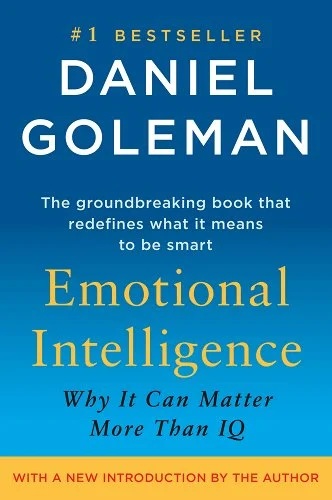
Daniel Goleman’s New York Times bestselling book, Emotional Intelligence, is filled with research based on the concept. Goleman initially wrote the book to help students overcome labels that suggest they are inferior because of their grades and low IQ.
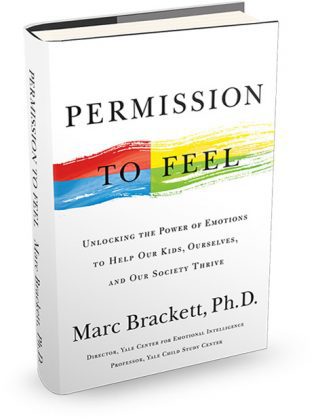
Marc Brackett’s book, Permission to Feel, argues that understanding and expressing our emotions is essential for personal well-being, healthy relationships, and success. Brackett introduces the RULER framework (recognizing, understanding, labeling, expressing, and regulating emotions), and he provides practical tools to help individuals process their feelings.
The Key Components of Emotional Intelligence
At its most basic level, emotional intelligence requires us to recognize our own emotions and others’. It also involves managing our emotions and behaviors that arise in social and emotional situations.
When we measure emotional intelligence, we assess a person’s emotional self-awareness and ability to identify others’ emotions. Next, we assess how likely someone is to manage their behavior in social and emotional situations.
The below grid explains these four areas more precisely:
| Awareness | Management | |
|---|---|---|
|
Self |
Self-Awareness Accurately recognize and label your emotions and related behaviors. |
Self-Management Effectively manage your emotions and related behaviors. |
|
Others |
Relationship Awareness Accurately perceive and understand the emotions and behaviors of others. |
Relationship Management Recognize and understand how your emotions and behaviors impact others. |
In daily life, someone who has a high EQ will be able to exhibit the following abilities:
- Emotional Recognition: You can identify emotions in yourself and others. You pay attention to physiological signals (facial expressions, body language, vocal cues, racing heart, tight shoulders, etc.) This requires a key focus of awareness.
- Emotional Understanding: You are able to discern the underlying causes and triggers of emotions and can answer the question, “Why am I (or is someone else) feeling this way?” The key focus of this ability is the ability to determine cause and effect. A person’s anger might actually be stemming from an underlying fear, exhaustion, or feeling unappreciated.
- Emotional Labeling: You are able to map specific emotional states to emotional vocabularly (see the mood meter). The key focus here is vocabulary precesion. You go beyond broad terms like ‘bad’ or ‘fine’ to nuance terms like anxious, disappointed, alienated, or elated. Accurate labeling enables targeted regulation.
- Emotional Expression: Knowing when and how to communicate feelings in social contexts that are aligned with cultural, professional, and relational norms. The key focus is constructive communication. You are able to express emotions authentically without overwhelming others, resorting to passive-aggressiveness, or engaging in unsafe outburts.
- Emotional Regulation: You apply practical strategies to monitor and manage emotional responses to achieve personal or professional goals. The key focus is action and management. You engage in mindful breathing, physical movement, or self-talk to alter emotional trajectory rather than suppressing or being controlled by emotions.
Barriers to Developing Emotional Intelligence
There are several major psychological, cultural, and structural barriers that prevent people from developing their emotional intelligence.
Cultural and Social Conditioning
Emotional Stigma & Gender Norms
Society frequently labels certain feelings (like anger or sadness) as “bad” or “weak.” This will condition individuals to suppress or ignore them. As an example, it is considered unusual for men to cry, or for women to be ambitious in their goals. Can you think of any other examples?
The “Judge” Mindset
People tend to judge feelings immediately as negative or positive rather than viewing them neutrally as useful information. Feeling despair over the loss of a childhood pet isn’t a ‘bad’ emotion – it’s information about how much that pet meant to you.
Lack of Emotional Vocabulary
Most people rely on a narrow, generic set of emotion words (e.g., “fine,” “good,” “stressed,” “bad”), which limits their ability to accurately pinpoint and process specific emotional states.
Psychological and Behavioral Habits
Fear of Vulnerability
Expressing authentic emotions carries a perceived risk of rejection, criticism, or conflict, leading people to default to emotional avoidance. Interestingly, when people are vulnerable with themselves, it acts as a signaling for others to be vulnerable too. It’s one of the reasons we teach vulnerability based trust on teams using the Five Behaviors training workshop.
Self-Regulation Deficits:
Without explicit training, people often rely on maladaptive coping mechanisms—such as venting, denial, substance use, or passive-aggressiveness—rather than healthy regulation strategies. Everything DiSC Product Conflict teaches how we all engage in some form of destructive responses in social and emotional situations.
Short-Term Comfort Bias
Suppressing or ignoring an emotion provides immediate relief, even though it causes greater psychological friction in the long run.
Systemic and Environmental Factors
Lack of Formal Emotional Education:
Schools and workplaces historically prioritized cognitive and technical abilities while ignoring social-emotional skills, leaving most adults without a foundational frameworks to rely on to improve and measure EQ. College Admissions in the United States require prospective students to take a battery of cognitive tests when EQ is a better predictor of success compared to IQ.
Low Emotional Intelligence in Leadership
When parents, teachers, and bosses lack emotional intelligence, they inadvertently model poor regulation and create environments where emotional expression is punished or dismissed.
Leverage Emotional Intelligence for Relationship Management
Emotionally Intelligent people are most known for how they manage their relationships.
Unfortunately, it’s often easier to spot non-emotionally intelligent individuals in the workplace. Here are a few examples:
- A manager takes their anger out on subordinates.
- A friend who can’t hold back their thoughts, even when they might be hurtful.
- A colleague who isn’t empathetic to another person’s situation but expects it for themselves.
You likely have experienced similar types of people in your own workplaces, or you may recognize yourself in one of these examples. While these situations don’t define a relationship, they can cause lasting friction and division that will take time to heal.
By employing an emotional intelligence training program, you can help employees learn how to mend relationships or prevent future destructive interpersonal interactions. EQ training programs can deepen workplace relationships, which can help your workplace be both a more welcoming and accepting workplace while also being able to achieve more workplace goals.
Deeper Relationships = More Engaged Employees
There is excellent data that showcases how impactful good relationships are towards organizational and individual success within the workplace.
Gallup’s annual workplace survey shows that employees are more engaged when they have a best friend at work. Furthermore, they are less likely to leave their current organization when they have a best friend at their job.
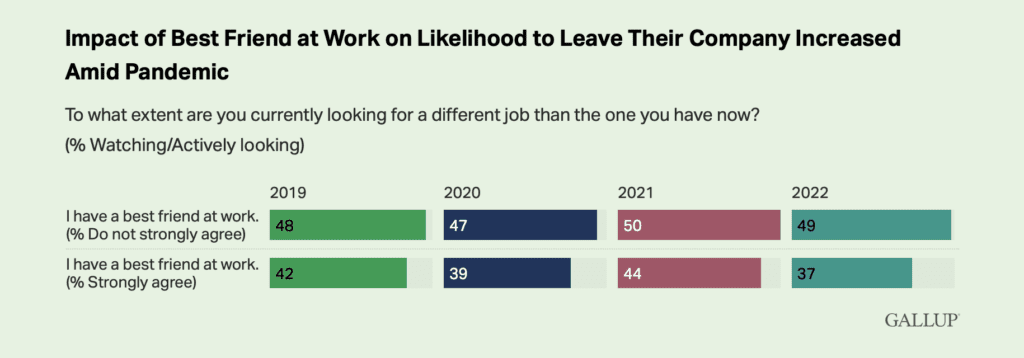
Now, you might think it would be very creepy for organizations to work towards developing ‘best friends’ at work. We would agree. The purpose of this question comes from a retention perspective. At the very least, employees should have a strong relationship with their manager. Managers, like a best friend, should be able to give advice and seek ways to support the career and development of their direct reports.
Organizations have a lot of opportunities to foster stronger workplace relationships by improving emotional intelligence – especially with managers. Teaching managers how to identify their emotions and manage their behaviors will make them more likely to develop deeper relationships with their teams.
Start Your EQ Training after Analysis
Before employing EQ training programming, get a pulse on how your organization is doing today. Most companies already leverage an annual survey (if you don’t, consider reading and purchasing this book on the subject), and by adding a couple of questions around EQ, you can find your organizational EQ.
Here are some questions you might want to consider asking:
- My co-workers and manager(s) are mindful of the thoughts and feelings of others.
- My manager is able to diffuse tense situations.
- My co-workers recognize when they are emotional and take appropriate action to curb destructive behavior.
These questions could be asked in a true or false format or asked as a rating on a scale (1 = Never / 5 = Always). After you have this data, you can leverage your EQ programming better because you will have data to compare year after year.
Over time, you will be able to see how the organization is trending, which will help you recognize the success of the programs you are running.
Additionally, these insights will help you target where you should employ your EQ training in the first place. If you find that the issue rests with a single department, location, or group of managers, you can focus your efforts on those individuals before working with the rest of the organization.
When EQ Training Won’t Work
It’s essential to recognize that the best-designed and facilitated EQ Training program may not have any impact if there are the following conditions:
- High stress (either due to the workplace or from the outside)
- Mental health-related issues (depression, anxiety, etc.)
- Mistrust in the team or organization
This topic could fill its own blog article. However, If you recognize that any of these conditions are present, consider suspending your training program later or asking an individual to join a future session when they are in a better headspace to participate.
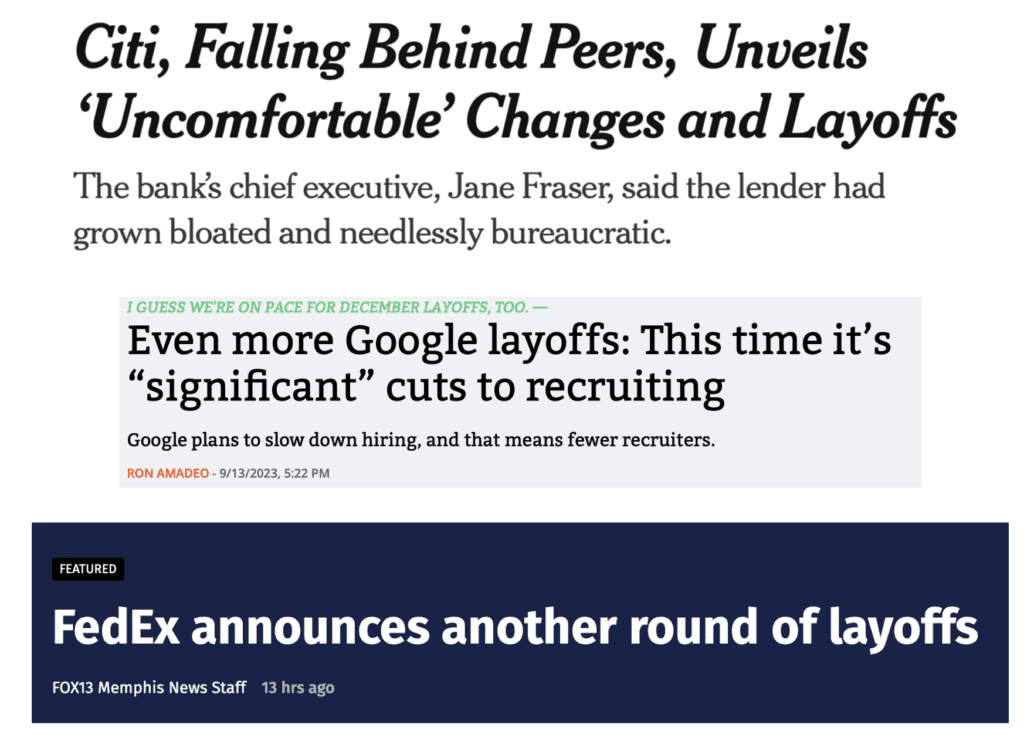
Let’s state the obvious: if your organization is going through layoffs, it’s not a good time for an EQ Workshop.
For example, if your organization recently went through a round of layoffs due to loss of revenue, company mergers, or restructuring, your training program will likely fall on deaf ears. The organization or team may need time to move past these events before focusing on improving EQ.
Alternatively, if you know that a manager recently went through a particularly difficult time (divorce or death of a family member), consider giving them time to move past those issues before putting them in a position where they need to balance thinking about issues in their personal and professional lives.
Key Takeaways:
- High-EQ people are easier to build relationships with. Workplaces with deeper relationships are more engaged and successful.
- Before employing EQ Training programs, measure your workplace’s EQ baseline to compare program success year over year.
- Recognize when conditions aren’t suitable for your EQ Training and wait to deploy it when the time is right.
Choosing an EQ Assessment for your Workplace
Emotional Intelligence (EQ) training programs don’t require the use of an EQ Assessment or test. There are many stories about coaches who have developed an internal measurement for a client’s level of EQ based on the progression of the sessions.
However, EQ Tests offer the added benefit of providing identifiable measurements to help learners understand what causes them difficulty and where they should focus their energy as they look to improve. After all, the definition of EQ (emotional quotient) means a degree or identifiable characteristic of emotional intelligence.
We offer two different versions of EQ Assessments. Both assessments are researched for reliability and validity and come with their own benefits and limitations.
EQ Assessment Pros and Cons
Everything DiSC Agile EQ is published by John Wiley & Sons. It is part of the Everything DiSC Product suite and is available on a learning platform called Catalyst.
Everything DiSC Agile EQ Assessment Pros:
- Approaches emotional intelligence from a flexibility perspective rather than a fixed perspective.
- Uses the DiSC Model to help teach self-awareness and behavioral styles.
- Provides access to a learning platform for additional insights and learning opportunities.
Everything DiSC Agile EQ Assessment Cons:
- Pricing
The EI Assessment is sold as a stand-alone product and offers an Emotional Intelligence Coaching certification for practitioners who want to become a Certified EQ Coach.
EIQ Assessment Pros:
- Offers an affordable EQ Assessment.
- Available as a 360 option so leaders can get feedback on their EQ from others.
- It is part of a certification course so coaches can build confidence in their EQ Coaching and training.
EIQ Assessment Cons:
- Does not offer a comprehensive learning platform or offer behavioral insights through a behavioral model (like DISC).
Key Takeaways:
- Ensure the assessment is validated and well-researched.
- Choose if you need a simple quotient assessment or one that is offers a more robust solution and learning platform.
How to Structure Your EQ Workplace Training
In any training program, getting your training space correct (both physically and mentally) is essential. It might seem too silly, but your space can make or break your program regardless of how prepared you are to lead it.
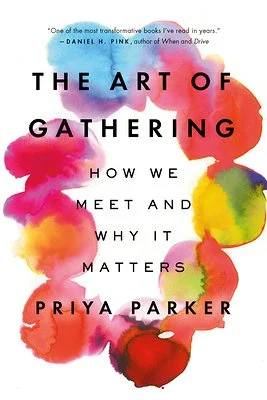
Priya Parker’s book, The Art of Gathering, offers a thoughtful guide for understanding and setting expectations for any gathering.
Since EQ programs focus on improving self-awareness and developing empathy, it’s essential that the space provides some intimacy.
Here are some ideas:
- Provide a journal for learners to write down thoughts, insights, and anything they want to work on. Encourage them to write in the journal instead of filling out worksheets if they would prefer to keep their thoughts private.
- Ensure learners are seated around tables with an even number of people to have one-on-one discussions.
- Use a private space that is appropriately sized for the number of learners, and ensure the door is closed throughout the session.
By spending time preparing the space, you will limit variables that could derail your session.
Create a trusting environment at your Workplace
Before you begin your session, invite the group to create some ‘house rules’ for the session. As the facilitator for the session, you could offer the first rule. Here are some examples:
- Turn off or silence all electronics for the duration of the session.
- What is discussed in this room stays in this room unless all parties are open to allowing it outside of the session.
- Be empathetic and treat each other with kindness.
This simple exercise aims to set expectations about the rules of engagement during the session. Since interpersonal relationships and self-awareness can be awkward subjects, it’s imperative that your participants feel comfortable from the beginning.
Identify a personal EQ Goal
Unless you work as a coach, your training will encounter individuals at varying levels of EQ. While it’s possible for you to help set a goal for the training, you may want to allow the learner to identify what outcomes they want to achieve by the end of the session.
To help structure this, you could provide some example goals that learners can adopt or modify for themselves as they go through the workshop. Here are some examples:
- Become more aware of when my emotions affect my behavior.
- Become more aware of when someone’s behavior is affecting my emotions.
- Develop more control over my behavioral responses to emotional and social situations.
While learners may not have a set goal of improvement until the end of the session, it’s imperative that they are focused on identifying what their goal should be throughout the session. This will make the activities more meaningful and insightful.
Choosing EQ Activities for the Workplace:
What activities you choose to help improve emotional intelligence will largely depend on who is attending your workshop and the amount of time that you have.
There are off-the-shelf EQ training programs that you can purchase from our online store directly that include activities, videos, handouts, and a scripted leaders guide.
If you create your own activities, ensure they include reflection and active discussion. Here are a few examples to help you get started:
- Pair Activity: choose one person to listen and record notes and one person to talk about a time they let their emotions control their behavior.
- Give as much detail as possible.
- The person who is listening and taking notes will listen to identify as many different emotions that they are hearing as possible.
- At the end of the story, discuss what emotions were heard and review what was missed.
- Reflection Activity: Think about the last time something made you feel angry.
- What happened?
- How did you behave?
- If you could go back and change how you acted, what would you have done differently?
As you create or identify activities that you want to use, go back and think about your audience and ensure that they match their needs.
Key Takeaways:
- Create a trusting environment by identifying and setting up the physical space to match your goals and activities of your workshop.
- Help learners identify a strategic goal by the end of your workshop.
- Use activities that are both reflective and active.